
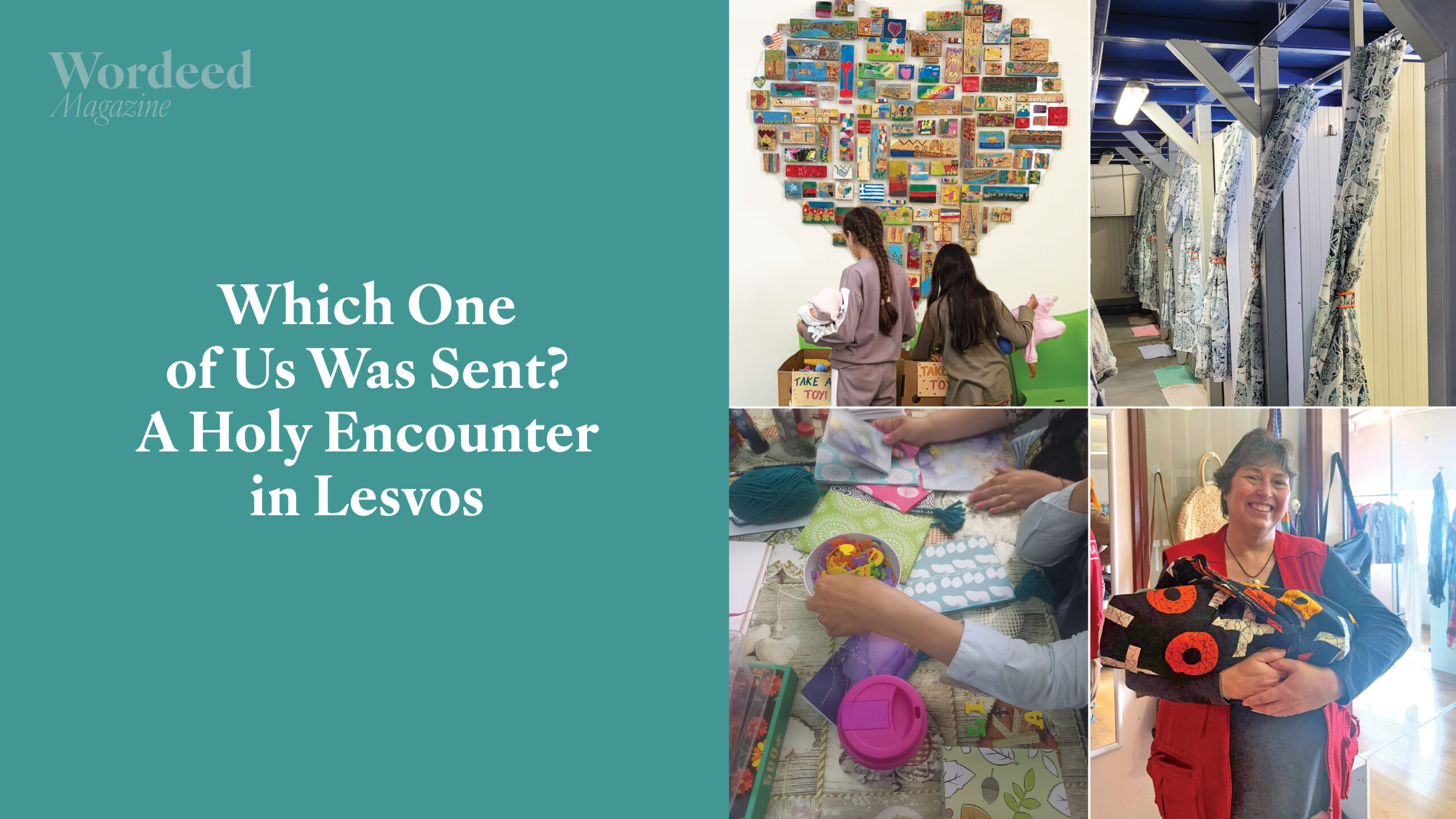
One morning in May, as I sat at the shower desk folding towels, a Syrian woman approached me. When I looked up, she smiled.
“Madame,” she said, making the universal signal for a lighter.
I’m not a smoker, so I didn’t understand until she pulled a cigarette from her purse.
I laughed. “Oh, a lighter. Yes, I will find one.”
I borrowed one from a Greek staff member. When I returned, I held it up like a prize and said, “Ta-da!”
She laughed, and I laughed, and we went outside to sit in the warm Aegean sun.
That morning, I was serving at a Women’s Community Centre in Lesvos, Greece, run by CBM partner All4Aid. The Centre offers female refugees hospitality, friendship, dignity, and hope without judgment or drama, in the name of Jesus. Nothing mattered more than finding a lighter for that young refugee mom and making her laugh.
I had encountered Yasmin* several times. She came with her three children two or three times a week to bring laundry, take a hot shower, or simply sit, watching them play and drinking hot chai.
She spoke a few words of English, but most of our communication was through gestures, pantomime, and exaggerated facial expressions. It takes energy and feels silly, but when we are willing to be vulnerable, heart begins to speak to heart.
As we sat in silence, I tried to look politely at her face and hands. I wondered what her life in Syria had been like. Did she have a career, or was she a stay-at-home mom? Where did she live? What did she do for herself? Why did she leave? What was she hoping her future would be?
In the sharing of our stories, we ministered to each other. In her resilience and determination to continue toward a new life, she is raising resilient children. She encouraged me on my own journey, without knowing it.”
She caught me staring, and I smiled.
“How old is your baby?” I asked.
All the women recognize the English word baby, so I did not have to pantomime it.
She held up five fingers.
“When did you get to Lesvos?”
“January,” she said.
I did the math. The baby may have been born in the camp, or somewhere in Türkiye.
“How many children do you have?”
She held up four fingers. I had only seen three. I guessed the oldest was a boy, because males over five are not permitted in the Centre.
“Where is your son?”
She pointed toward an NGO across the street. “With a friend.”
She looked down for a long minute, then said, “I have two babies in heaven,” pointing upwards, “and another one gone.”
Gone.
The word hung in the air between us.
I wondered what it meant, but I had no way to ask and didn’t know if I should. I watched her smoke as I prayed for wisdom.
“Is your husband in camp with you?” I asked, pointing to a ring on my finger.
She shook her head and pointed upwards.
“My husband—heaven.”
She held my eyes, and the enormity of her situation rushed over me.
“How long has he been in heaven?”
She showed me eight fingers.
Eight. Eight weeks, months, years?
The warmth of the sun filled the space between us.
I thought about the strength it took to travel the Refugee Highway alone with children, and the daily battles to keep them safe. No wonder she was often at the Centre; it was safe. I thought again about the child that was gone, the pain she must be carrying, and the dangers she and her children still face, even on the cusp of a new life.
“How are you doing?” I asked softly.
She seemed to understand. She pantomimed sleep.
“Tired,” she said. I laughed.
“I guess you’re tired. Four children alone in camp. That’s a lot.”
She nodded, and we laughed together.
“My husband is also in heaven for seven years. Maybe our husbands know each other and drink coffee together.”
Her face was sympathetic, and she seemed to like that idea.
We sat a few more minutes before she rose to check on her children. Before we went in, I rested my hand on her shoulder. Her eyes filled with tears and she nodded.
As I returned to folding towels, I checked the clock. We had been outside for fifteen minutes, but it seemed much longer. It felt like a holy moment in God’s presence between two women worlds apart, yet sharing a common human experience that shrank the distance to nothing.
In the sharing of our stories, we ministered to each other. In her resilience and determination to continue toward a new life, she is raising resilient children. She encouraged me on my own journey, without knowing it.
On that day, I wondered which one of us was sent, and which one of us served. Only God really knows.
People sometimes ask if I share the gospel with refugees, often meaning, do I preach. All4Aid’s Code of Ethics does not allow us to proselytize. But as a faith-based mission, we share Christ’s light and love in our words and actions.
God is at work in Lesvos. As a Canadian Baptist, I am privileged to be part of it.