
Communications & Digital Media Specialist
When it comes to sustainable community development, one size doesn’t fit all. That’s why Canadian Baptist Ministries takes different approaches to its partnerships all around the world. While Bolivia’s model thrives on deep, long-term collaboration, India’s focuses on shorter, targeted partner- ships that empower communities to stand on their own.
Bolivia: Walking Together for the Long Haul
In Bolivia, CBM’s partnerships stretch over decades, and these relationships are built on trust and time. According to Patty Nacho, Team Leader for Latin America, these relationships are more than professional collaborations; they’re deeply personal.
“Friendship is at the heart of everything,” Patty explains. “We’re not just organizations working together — we’re people who care about each other. That kind of bond doesn’t just happen overnight; it’s built over years of walking together through good times and challenges. The idea of being equal partners is very important in this long-lasting relationship between CBM and Bolivia.”
Bolivia’s unique social and political landscape requires creative solutions. Corruption and bureaucracy can slow things down, but CBM equips partners to navigate these challenges with a focus on capacity building—helping partners gain the skills and networks they need to keep projects running smoothly. The key here is respecting local leadership and letting our partner communities take the lead.
“It’s about trusting our partners and knowing that they can develop new projects and work in new areas, and we’re going to be with them and work with them in that process,” explains Patty. “We approach everything with humbleness. We don’t know everything, and there is so much we can learn from our partners in Bolivia.”
CBM’s role is less about directing and more about supporting. Partners like the Emmanuel Foundation exemplify this. They don’t just rely on CBM’s funding; they contribute financially themselves, demonstrating their commitment to sustainability.
“Success here means ownership,” Patty says. “When a partner is willing to invest their own resources and develop their own networks, we know we’ve done our job well.”
And the church is central to everything. “The local church will outlast any partnership,” she emphasizes. “When churches take the lead, the impact doesn’t just endure — it grows.”
“When churches take the lead, the impact doesn’t just endure – it grows.”
India: Planting Seeds for Independence
In India, the rhythm is different. Formal partnerships are shorter, often lasting just three to five years. Suraj Komaravalli, CBM Team Leader for Asia, explains why: “We want to train and equip partners to carry on God’s mission without our sustained financial support. It’s about giving them the tools to thrive independently.”
This approach fits India’s vast and diverse landscape, where needs vary widely from region to region. CBM partners with churches and community organizations, often in remote areas where resources are scarce. The goal is to empower local leaders to meet those needs in ways that last.
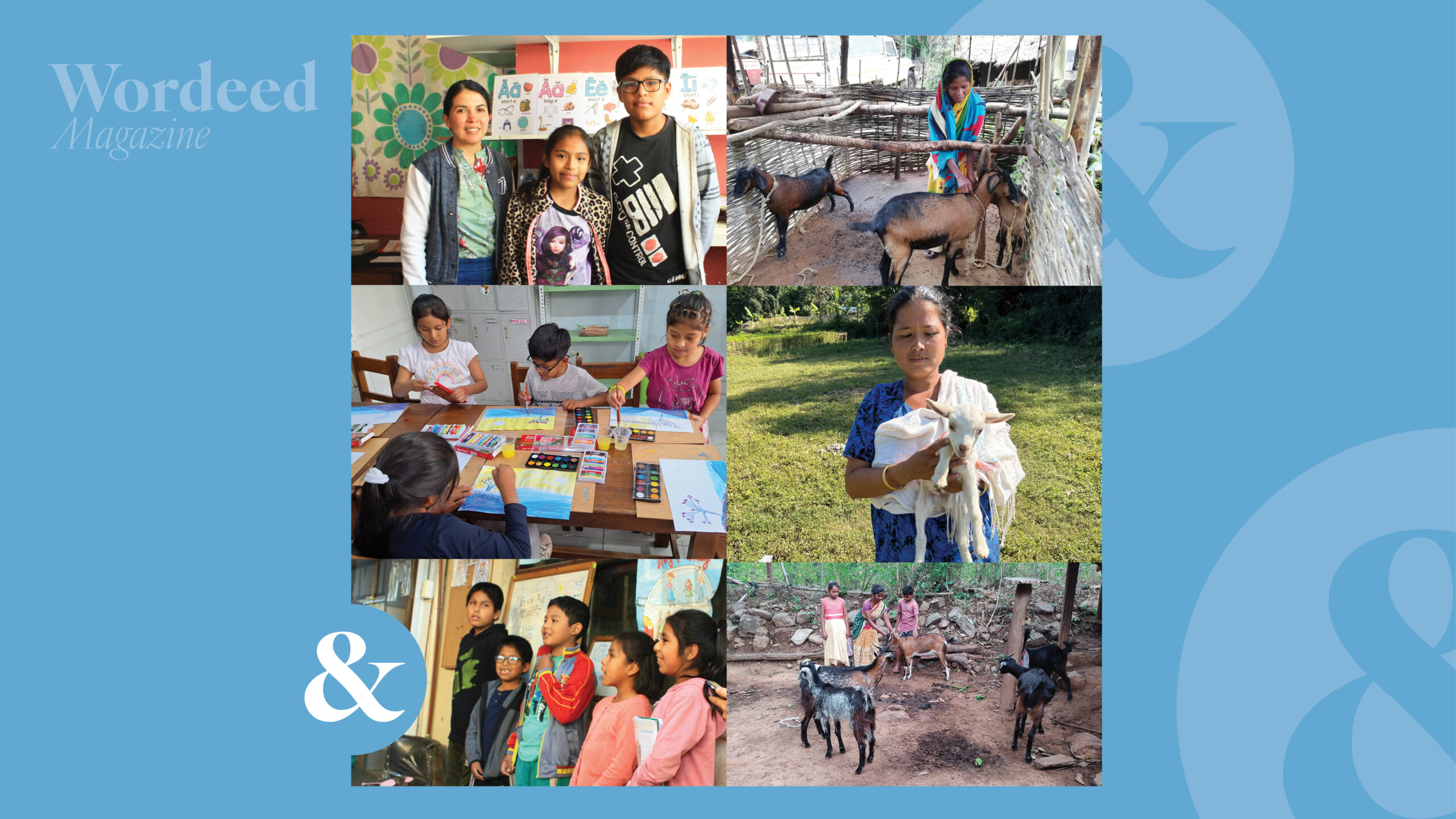
Take the Soura Baptist Church, for example. CBM helped them start a goat-rearing income-generation project. Today, the goat rearing continues to expand into more than 22 areas and helps them fund tutoring centers and programs for widows, entirely managed by the church. “That’s what success looks like for us,” Suraj says. “When our formal partnership agreement ends, the work doesn’t just continue — it grows. We want to make sure that the partner’s capacity has expanded.”
The process begins with clear expectations. From the start, CBM emphasizes that the projects belong to the partners, not to CBM. “We tell them, ‘This is your mission. We’re here to walk with you to get started, but you’ll take it forward,’” Suraj says.
Capacity building is key. Workshops teach partners everything from financial management to approaches to Integral Mission. In most cases, CBM helps launch income-generating initiatives like fish farms or poultry busi- nesses as part of these projects. This not only addresses immediate needs but also provides funds for future community projects, allowing the local church to continue building impact in their community.
Monitoring and mentoring are ongoing. CBM staff visit quarterly to check on progress, provide guidance, and celebrate successes. Even after a partnership ends, Suraj and his team make annual visits to check in with former partners and see how the work is continuing.
“My goal since I started with CBM,” Suraj says, “has been to move partners from a place of dependency to sustainability, a lack of ownership to now being owners, and from a lack of vision to now being self-reliant and helping their communities stand on their own two feet.”
Sustainability fosters partnerships rooted in mutual growth, respecting capacities, building trust, ensuring accountability, managing expectations, and sharing responsibilities equally without superiority.
Two Paths, One Goal
While the approaches in Bolivia and India differ, the heart of CBM’s mission remains the same: to ‘Partner with local churches around the world to bring hope, healing, and reconciliation through word and deed.’
CBM’s work in Bolivia and India reminds us that there’s no single formula for creating sustainable change. What works in one context might not work in another. The key is adaptability — listening to local voices, respecting expertise, and tailoring approaches to meet unique needs.
For Patty, the lesson is clear: “Sustainability isn’t something we impose. It’s something we nurture, side by side with our partners.”
And for Suraj? “Partnerships should always reject dependency. It’s about empowering communities to lead and grow on their own.”
In both Bolivia and India, CBM’s partnerships are proof that lasting change doesn’t come from one-size-fits-all solutions. It comes from relationships, respect, and a shared commitment to transformation that endures.